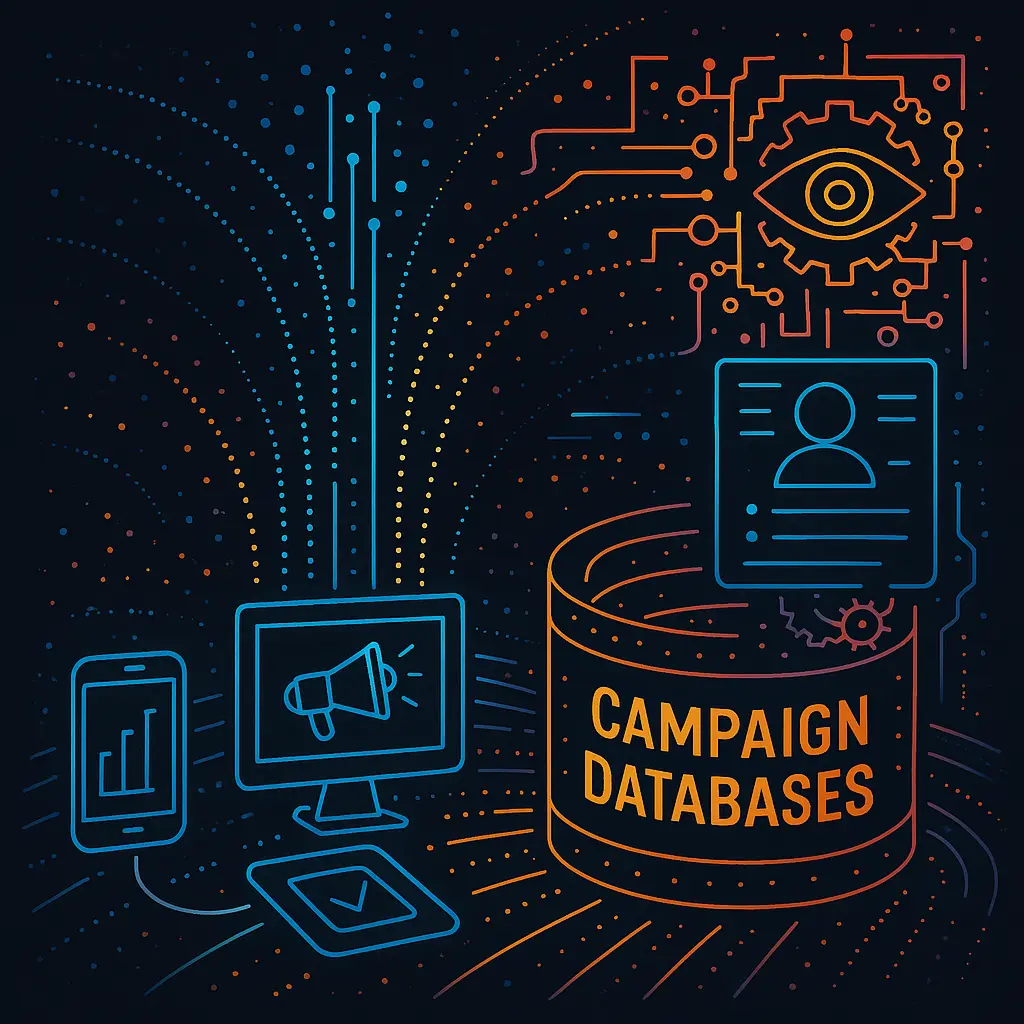
How Political Ad Targeting Works: The Surveillance Machine Behind Campaign Ads
You search for information about climate policy. Three days later, you see a Facebook ad from a Senate candidate talking about green jobs. You mention student loans in a Reddit comment. A week later, Instagram serves you an ad from a PAC promising debt forgiveness. You don't remember signing up for any of this. You didn't.
Political ad targeting works the same way commercial ad targeting works, with one crucial difference: campaigns aim to change your vote instead of your shopping cart. The surveillance infrastructure is identical. The data sources are identical. The auction mechanisms are identical. What changes is the goal and the regulatory environment, which is far more permissive for political speech than for selling shoes.
Here's the underlying mechanism, what data feeds it, and what you can actually control.
The Three-Layer Data Collection System
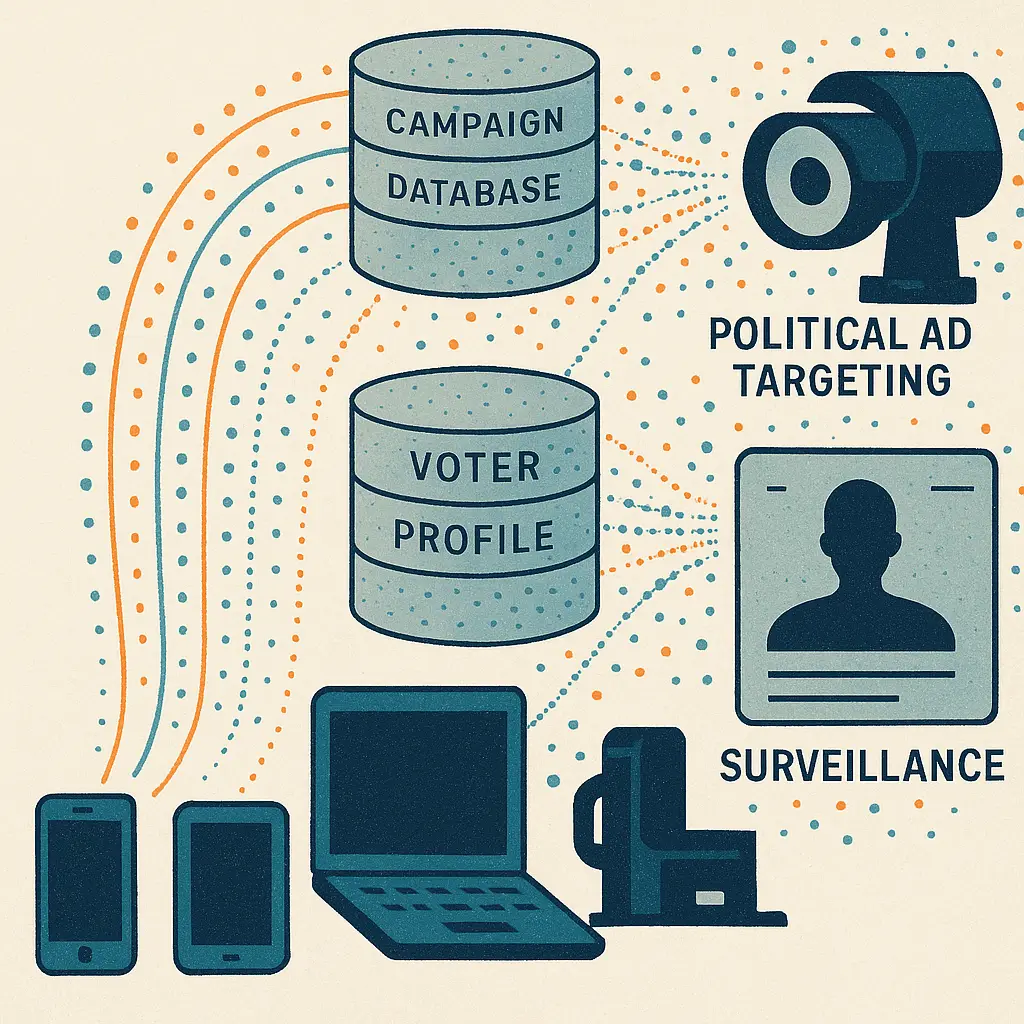
Political ad targeting starts with data collection across three distinct layers. Each layer feeds the next, building profiles detailed enough to predict not just how you'll vote, but which specific message will move you.
Layer 1 is voter registration data. This is public record in most states. Your name, address, party affiliation, voting history (whether you voted, not how), and registration date sit in databases that campaigns, parties, and data brokers purchase directly from election officials. Some states include age, gender, and phone numbers. This layer is foundational and mostly unavoidable. Registering to vote means entering this system.
Layer 2 is commercial data from brokers. Data brokers like Acxiom, Experian, and Oracle compile dossiers on hundreds of millions of Americans from credit transactions, retail purchases, magazine subscriptions, warranty registrations, and online behavior. EPIC has documented how these profiles include income estimates, home value, car ownership, shopping habits, magazine subscriptions, charitable donations, and inferred lifestyle categories. Political campaigns buy these profiles and merge them with voter files, adding consumer behavior to the political skeleton.
Layer 3 is behavioral tracking from your devices. This is where your browsing history, app usage, location data, and social media activity enter the system. Tracking cookies, advertising pixels, and device fingerprints follow you across websites. Social platforms log every like, share, comment, and pause. Your phone's location history maps where you go. Ad tech companies aggregate this behavioral data and sell access to it through real-time bidding platforms. Campaigns bid on your attention based on the combined profile from all three layers.
The power comes from merging these layers. Voter registration tells campaigns you're a registered Democrat in a swing district. Commercial data suggests you're a homeowner with kids and a household income around $85,000. Behavioral tracking shows you read articles about education policy and visit parenting forums. The campaign targeting system concludes you're persuadable on school funding issues and serves you an ad about protecting public schools. You never told them any of this directly. The system inferred it from fragments.
How Platforms Enable Microtargeting
Social media platforms and ad networks provide the infrastructure that turns raw data into targeted political messages. The process runs through automated systems you never see.
Campaigns upload voter lists to Facebook, Google, or other platforms. The platform matches email addresses, phone numbers, or physical addresses to user accounts, creating what's called a custom audience. This audience becomes the seed for targeting. Campaigns then layer on additional criteria using the platform's own data: age, gender, location, interests, behaviors, pages followed, and engagement patterns.
Facebook's ad platform, for example, lets campaigns target users who like specific political pages, engage with news content, or show interest in topics like immigration, healthcare, or gun rights. Google lets campaigns target based on search history and YouTube viewing patterns. The platforms don't hand over raw user data to campaigns, but they don't need to. The targeting interface gives campaigns enough control to reach narrow slices of the electorate with precision.
Lookalike audiences extend this further. Campaigns feed the platform a list of known supporters or persuadable voters. The platform's algorithm identifies other users who share similar characteristics and behaviors, expanding reach to people the campaign has never directly contacted. The algorithm doesn't explain its reasoning. It just delivers an audience predicted to respond similarly.
Mozilla's privacy documentation outlines how browser-based tracking feeds this system. Cookies, pixels, and fingerprints collect data as you browse. Ad networks aggregate it. Platforms use it to refine targeting models. The entire chain operates in the background, invisible to you unless you actively audit network traffic or inspect page elements.
Campaigns also use data management platforms (DMPs) to centralize and analyze data from multiple sources. A DMP ingests voter files, commercial data, website analytics, email engagement metrics, and ad performance data, then segments audiences for targeting. The same person might appear in multiple segments: persuadable suburban parent, climate-concerned homeowner, small business owner worried about taxes. Each segment gets a different ad, testing which message resonates.
The platforms profit from this. Political ad spending in the U.S. runs into billions during election cycles. Platforms take a cut of every ad impression. They have financial incentive to make targeting as precise and effective as possible, which means collecting more data and building better prediction models.
The Real-Time Bidding Auction
When you load a webpage or open a social media app, an automated auction determines which political ad you see. This happens in milliseconds, invisible to you.
Here's the sequence. You visit a news site. The page contains ad slots managed by an ad exchange. The exchange sends a bid request containing information about you: anonymized identifier, browsing history, inferred demographics, location, device type. Political campaigns (and commercial advertisers) have pre-set targeting criteria and bid amounts. If your profile matches a campaign's criteria, their system submits a bid. The highest bidder wins. The ad loads. You see it. The entire process completes before the page finishes rendering.
This is programmatic advertising, and it's how most digital political ads get served. Campaigns don't manually place ads on specific sites. They set targeting parameters and budgets, then let automated systems bid on impressions that match their criteria. The system optimizes for reach, cost, and predicted engagement.
The opacity is intentional. You see the ad, but you don't see why you were targeted, who else saw it, or what other versions exist. Campaigns test dozens of variations, each tailored to different audience segments. The version you see might emphasize climate policy. Your neighbor sees one about tax cuts. Your coworker sees one about healthcare. Same candidate, different messages, all optimized for predicted response.
The FTC's privacy enforcement work has documented how data flows through these systems, though political ads often operate in regulatory gray zones that commercial ads don't. Campaigns exploit this. They target with precision while avoiding the disclosure requirements that apply to traditional media buys.
The auction model also enables dark money. PACs and outside groups can run ads without clear attribution, targeting narrow audiences unlikely to see fact-checks or opposing views. The platform knows who paid for the ad, but you might not. Disclosure varies by platform and jurisdiction, and enforcement is inconsistent.
What Campaigns Infer From Your Behavior
The profiles campaigns build go beyond demographics. They predict beliefs, priorities, and persuadability based on behavioral signals you might not realize you're sending.
Visiting certain websites signals interest. Reading articles about immigration policy suggests that issue matters to you. Watching videos about climate change indicates environmental concern. Engaging with social media posts about healthcare suggests that's a priority. Campaigns track these signals across the web, building models that predict your political leanings and issue priorities.
Location data adds another dimension. If you regularly visit a church, mosque, or synagogue, campaigns infer religious affiliation. If you frequent gun ranges, they infer gun ownership. If you shop at Whole Foods, they infer one set of values; if you shop at Walmart, they infer another. These inferences aren't always accurate, but they're accurate enough often enough to drive targeting decisions.
Social media engagement is particularly revealing. Liking a post doesn't just signal agreement; it signals which messages resonate emotionally. Sharing content indicates you're willing to amplify certain narratives. Commenting reveals how you think about issues and which arguments you find compelling. Campaigns analyze this engagement to refine messaging and identify persuadable voters.
The system also tracks non-engagement. If you scroll past an ad without clicking, that's data. If you watch a video for three seconds then close it, that's data. If you click an ad but don't convert (sign up, donate, volunteer), that's data. Every interaction, or lack of interaction, feeds the model.
Campaigns use these signals to segment voters into categories: base supporters, persuadables, likely opponents, low-information voters, high-propensity voters, single-issue voters. Each segment gets tailored messaging designed to maximize the desired outcome. Base supporters see mobilization messages. Persuadables see issue-focused appeals. Opponents might see nothing, or they might see suppression messages designed to discourage turnout.
The predictive models aren't perfect. They make mistakes. They overgeneralize. They miss nuance. But they don't need to be perfect. They just need to be better than random targeting, and they are.
The Regulatory Gap and Platform Policies
Political ad targeting operates under rules far looser than commercial advertising. The gap creates opportunities for manipulation that researchers and privacy advocates have documented extensively.
The FTC regulates commercial advertising for deceptive practices and requires disclosures about data collection. Political ads face no such federal oversight. The Federal Election Commission regulates campaign finance, not ad content or targeting practices. State laws vary, but enforcement is minimal.
Platforms set their own rules, and those rules change frequently. Facebook introduced an ad library in 2018 showing who paid for political ads and which audiences they targeted. Google restricted microtargeting in 2019, limiting campaigns to broad categories like age, gender, and location. Twitter banned political ads entirely in 2019, then reversed course under new ownership in 2023. TikTok prohibits political advertising but struggles to enforce the policy consistently.
These platform policies create inconsistency. A campaign might microtarget on Facebook while running broad ads on Google, or use dark posts (unpromoted content shown only to specific users) to avoid ad library disclosure. The rules shift, campaigns adapt, and the underlying surveillance infrastructure remains intact.
The European Data Protection Board has published guidelines on data processing that apply to political targeting in the EU, but U.S. campaigns operate under no comparable framework. GDPR requires explicit consent for data collection and gives users rights to access and delete their data. U.S. voters have no such protections for political data.
The regulatory gap also enables foreign interference. Foreign nationals can't donate to U.S. campaigns, but they can buy political ads on social platforms, target U.S. voters with propaganda, and amplify divisive content. Platforms have improved detection and disclosure since 2016, but the fundamental vulnerability remains: anyone with a credit card can buy access to U.S. voters through the same targeting infrastructure campaigns use.
The Cultural Reference That Fits
In The Good Place, the neighborhood's architect Michael runs a simulation where every detail is optimized to torture the residents in ways they don't recognize. The frozen yogurt shop offers endless flavors, but none taste quite right. The soulmate pairings seem perfect on paper but create constant friction. The environment adapts to each person's specific anxieties and desires, maximizing discomfort while maintaining the illusion of paradise.
Political ad targeting operates on the same principle. The system observes your behavior, builds a model of your beliefs and priorities, then serves you messages optimized to trigger specific emotional responses. You see ads that feel personally relevant because they are personally relevant, crafted from data about your life that you didn't knowingly provide. The targeting isn't torture, but it's manipulation nonetheless, designed to influence your behavior in ways you don't consciously recognize.
The difference is you're not in a simulation. You're in an ecosystem where your data is the product, your attention is the commodity, and your vote is the goal. The system adapts to you because that's how it's built.
What You Can Actually Control
You can't opt out of political ad targeting entirely, but you can reduce your exposure and limit the data campaigns collect.
Use ad blockers and privacy-focused browsers. Tools like Privacy Badger from EFF block third-party trackers. Firefox with Enhanced Tracking Protection enabled blocks cookies and fingerprinting scripts. Brave blocks ads and trackers by default. These tools won't stop campaigns from targeting you based on voter registration data or commercial profiles, but they limit behavioral tracking from your browsing activity.
Limit social media engagement. Every like, share, comment, and pause feeds the targeting system. You don't need to quit social media entirely, but reducing engagement reduces the data available for profiling. Avoid clicking on political ads, even out of curiosity. Clicks signal interest and increase the likelihood you'll see more.
Review and revoke ad permissions. Facebook, Google, and other platforms let you view and edit ad preferences. You can remove interests, turn off ad personalization, and limit data sharing with advertisers. These controls don't stop targeting entirely, but they reduce precision. Navigate to Settings > Privacy > Ads on most platforms to find these options.
Use email aliases and burner phone numbers. When signing up for political email lists or donating to campaigns, use an alias email address (many email providers support this) and a secondary phone number. This limits campaigns' ability to match your activity across platforms and merge it with commercial data profiles.
Opt out of data broker profiles. Services like Incogni automate removal requests to data brokers, reducing the commercial data layer campaigns use for targeting. Manual opt-out is possible but time-consuming. Consumer privacy guidance from the FTC outlines steps to reduce data broker exposure.
Understand that voter registration data is unavoidable. If you're registered to vote, campaigns have access to your name, address, party affiliation, and voting history. This layer is public record and can't be removed without unregistering, which defeats the purpose of voting. Focus on limiting the additional layers of commercial and behavioral data.
Don't trust platform transparency tools uncritically. Ad libraries and "Why am I seeing this?" explanations provide some visibility, but they're incomplete and often vague. Platforms show you a simplified version of targeting criteria, not the full profile or decision logic. Use these tools to understand broad patterns, but don't assume they reveal everything.
The reality is that political ad targeting will continue as long as the surveillance infrastructure exists. Campaigns use the same tools, data, and platforms as commercial advertisers. The regulatory environment favors free speech over privacy, and platforms profit from both. Individual actions reduce exposure but don't eliminate it. Systemic change requires policy intervention, and that's a political question, which means the people being targeted are the same people who'd need to demand reform.
You're not powerless, but you're not in control either. The system is designed that way.